
Headaches and jaw-related tension
Understanding headaches linked to jaw function
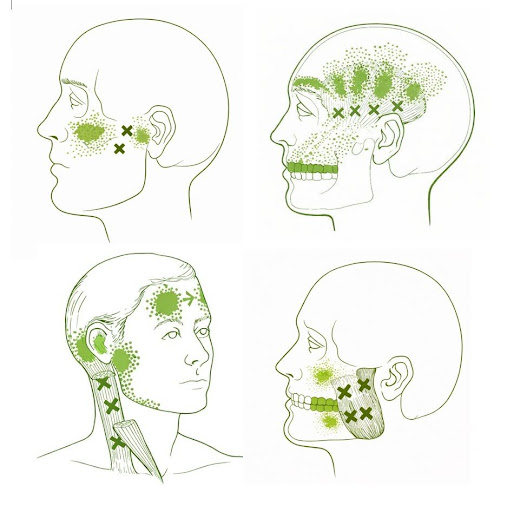
Jaw-joint pain, tense chewing muscles and clenching or grinding can contribute to some headache patterns, particularly pain around the temples, face, ears or upper neck.
However, not every headache comes from the jaw. Similar symptoms can have different causes, and migraine is a separate neurological condition that can coexist with TMD.
For some people, jaw-related factors may be a main contributor to their headaches. For others, they may add to an existing headache condition. Assessment helps identify whether the jaw, chewing muscles, neck, sleep or other factors may be contributing to your symptoms.
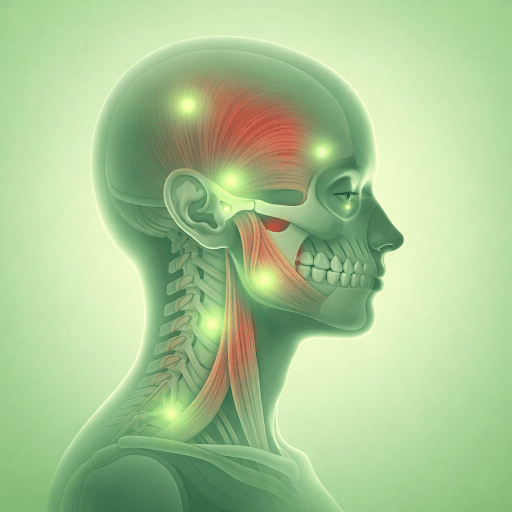

Where it shows up
Headache pain can overlap with other areas
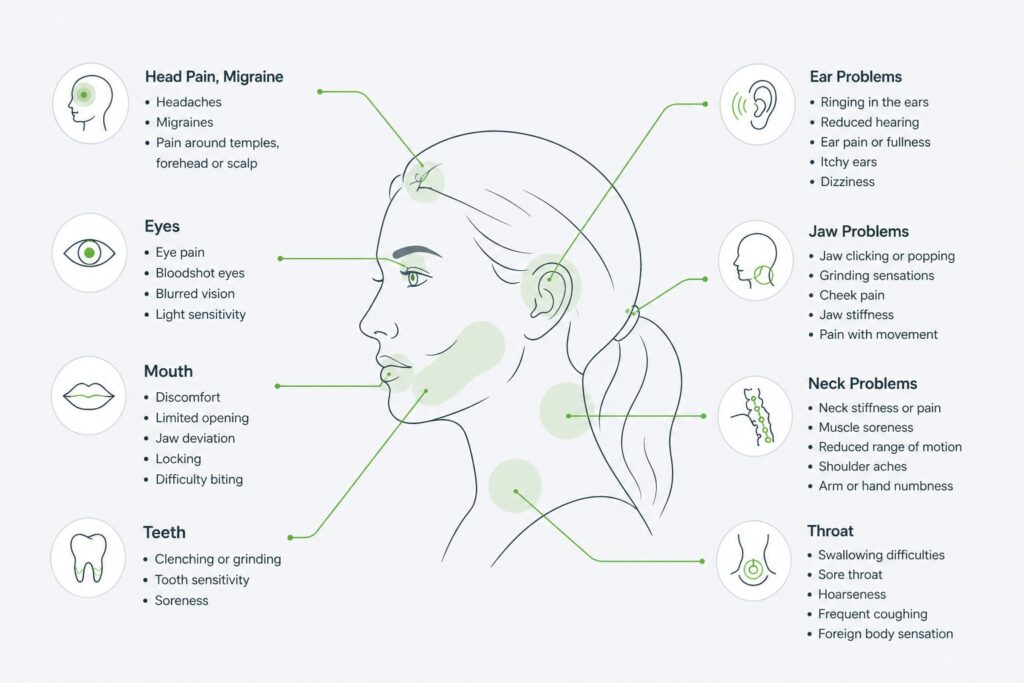
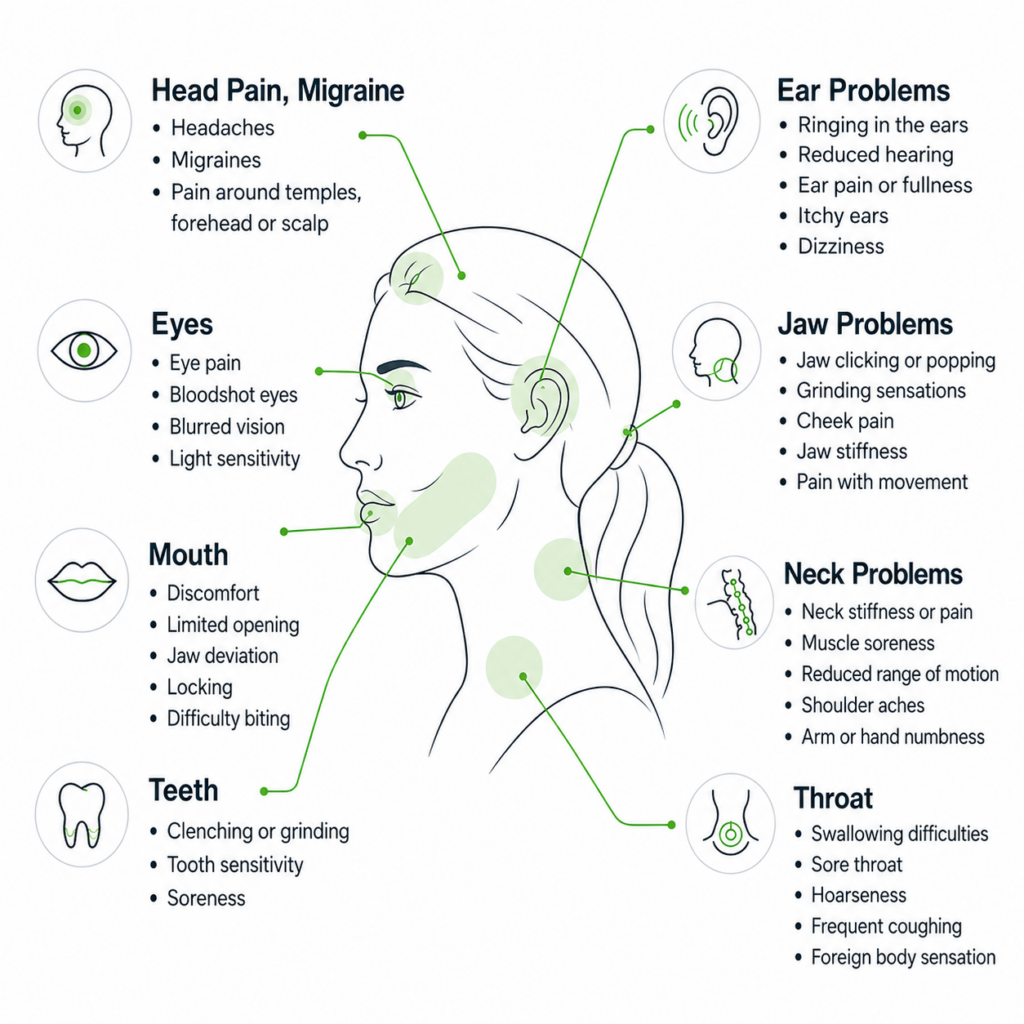
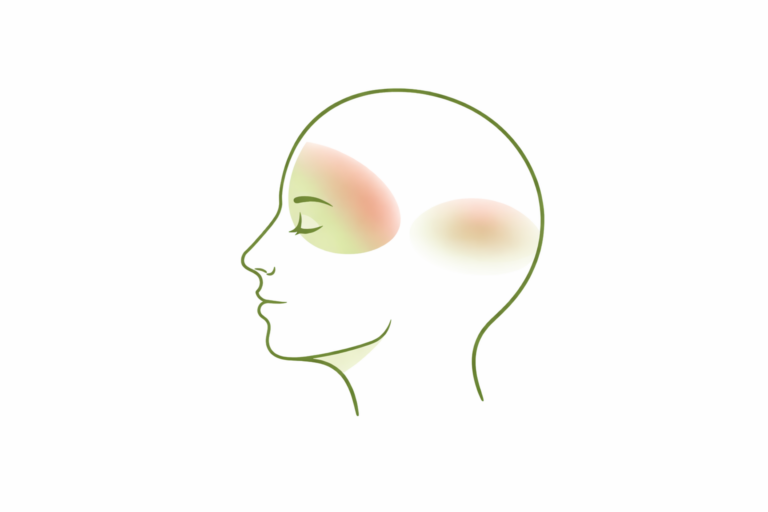
Common areas of discomfort
- temples or sides of the head
- around the eyes, forehead or sinus region
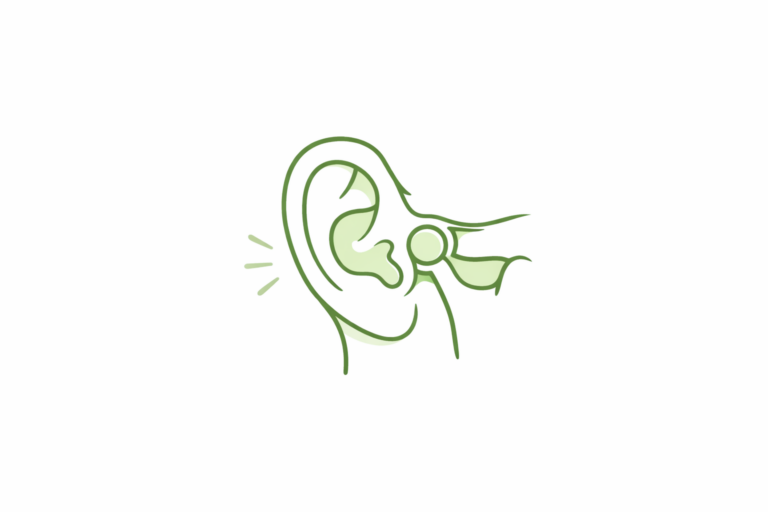
- around the ears or jaw joints
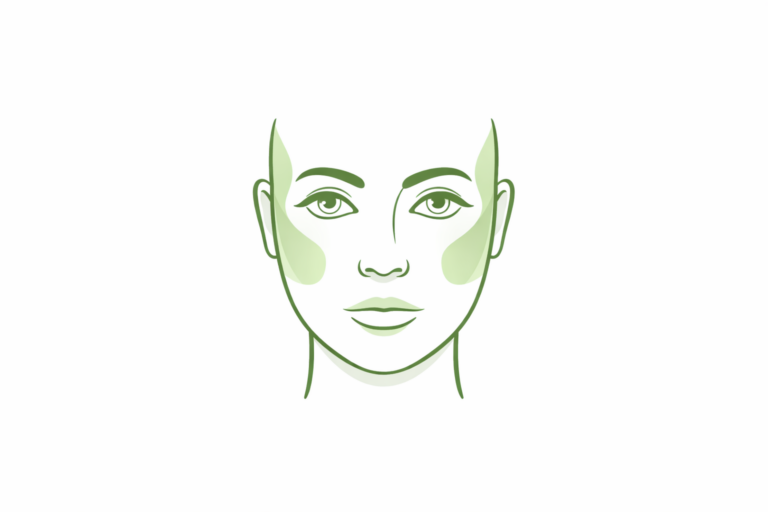
- through the face, cheeks or teeth
- into the upper neck or base of the skull
- morning headaches or jaw tightness on waking
Symptom patterns
Similar symptoms can have different causes
Tension-type headache
Cervicogenic headaches
Influenced by the neck and upper spine
Migraine
A neurological condition that can coexist with TMD and contribute to overlapping pain around the head, face or jaw.
Jaw-related tension can sometimes mimic tension-type or sinus-type headaches, and in some cases may contribute to how often headaches occur or how intense they feel.
Migraines and jaw-related tension
A neurological condition that can interact with jaw function
Migraine is a neurological condition involving increased sensitivity of the nervous system. It may present with throbbing head pain, sensitivity to light or sound, nausea, or visual changes.
Migraine is not caused by the jaw. However, migraine and TMD can coexist, and some patients experience both conditions. Research suggests an association between painful TMD and primary headache conditions, including migraine and tension-type headache.
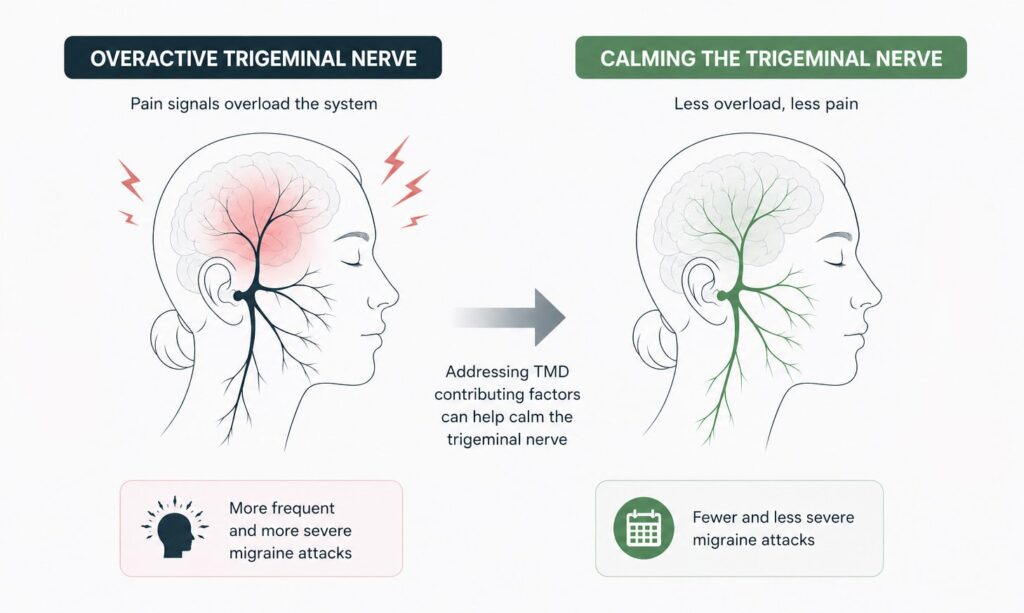
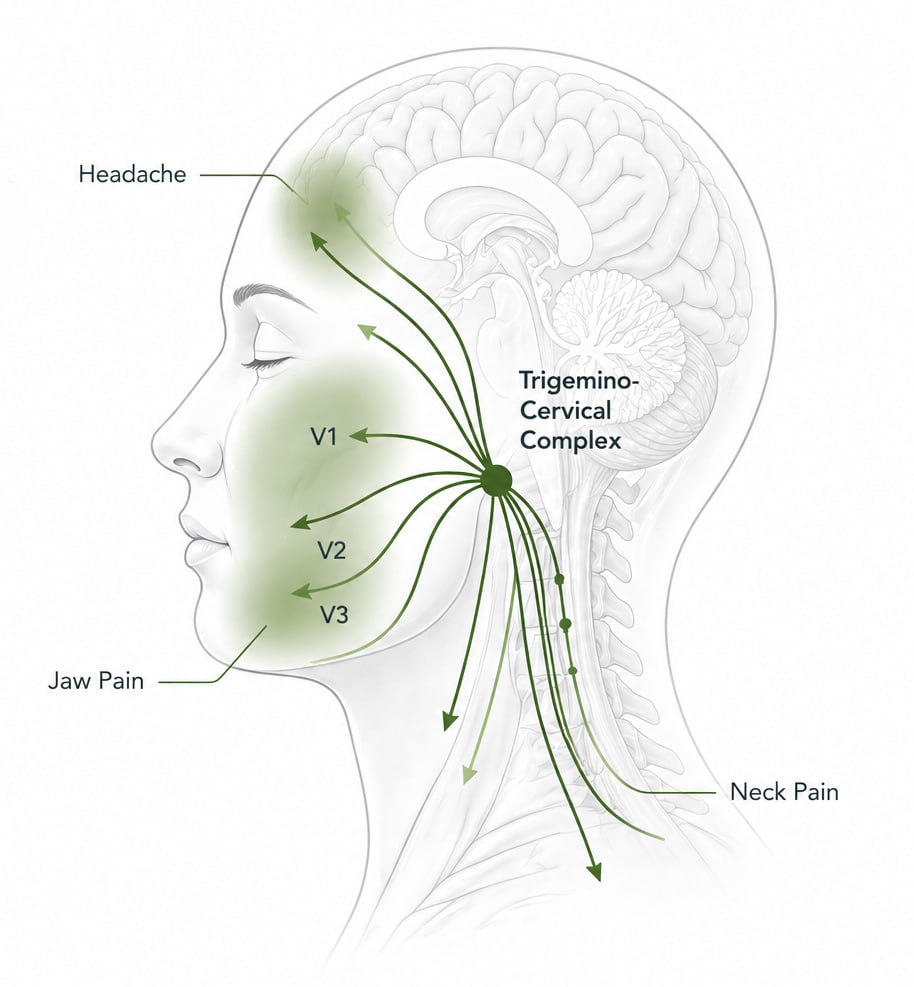
The trigeminal nerve carries sensory information from much of the face, jaw and head. When the jaw joints or chewing muscles are painful, overloaded or sensitised, these signals may add to the overall sensitivity of the nervous system.
Because of this shared pain pathway, jaw-related factors may contribute to headache or migraine patterns in some patients.
In people with both TMD and migraine:
- jaw muscle tension or joint irritation may add to the overall pain burden
- clenching, grinding or disrupted sleep may act as contributing triggers in some patients
- jaw-related pain may overlap with migraine pain around the temples, face or head
- each condition may still require its own diagnosis and management
Understanding this overlap is important. TMD and migraine can coexist, and each condition may require its own diagnosis and management.
Addressing jaw pain, muscle tension, clenching and sleep-related contributors may reduce one source of pain input entering shared trigeminal pathways. However, migraine and other headache conditions may still require separate medical management.
Whole-body connections
The jaw, head, and neck are closely connected
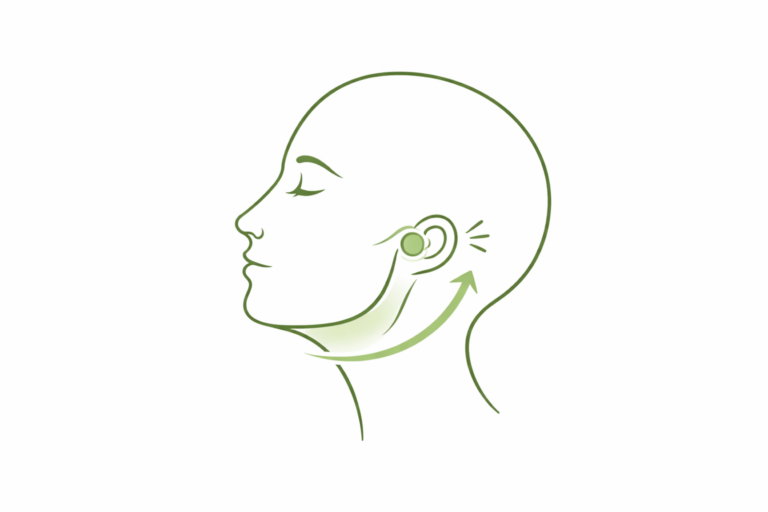
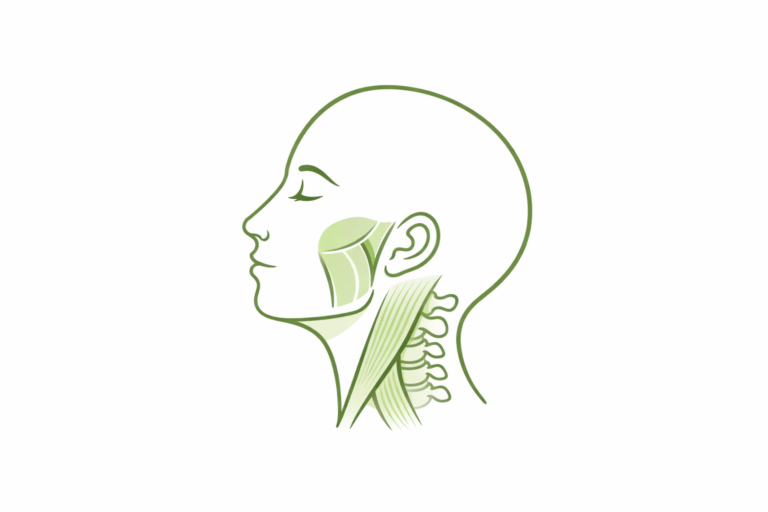
The jaw, head, and neck share nerve pathways, including the trigeminal nerve and its connection to the upper cervical spine. This allows pain signals to overlap between these regions.
Because of this, muscle tension or joint strain in the jaw or neck can be felt as a headache.
Pain may also be referred from nearby muscles. For example, tension in the jaw or neck muscles can produce pain in the temples, forehead, or around the eyes – sometimes resembling sinus pressure or tension-type headaches.
01
Muscle fatigue
02
Sleep-related factors
03
Postural strain
04
Referred pain
Why this can happen
Headaches may have multiple contributing factors
Headaches linked to jaw tension are often influenced by a combination of factors rather than a single cause.
These may include:
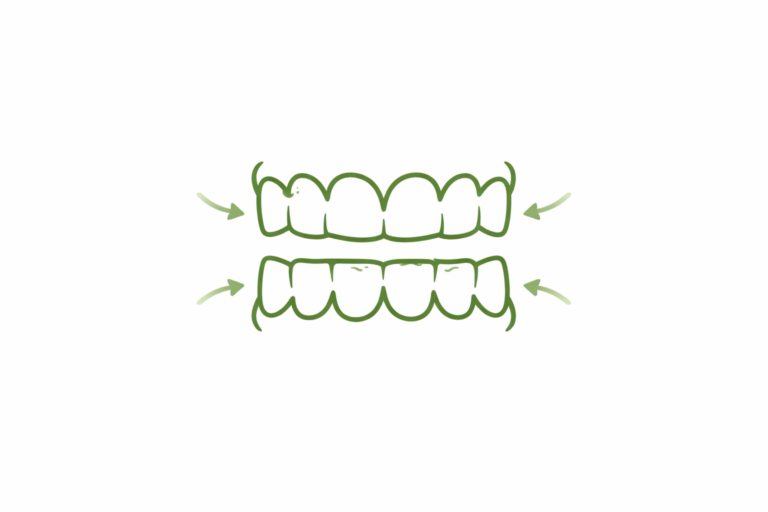
- muscle fatigue from clenching or grinding
- referred pain from jaw or neck muscles
- postural strain affecting the neck and jaw
- sleep-related muscle activity
- overlap with existing headache conditions
- Increased sensitivity within shared trigeminal pain pathways
- In some cases, increased sensitivity of the nervous system can amplify how pain is experienced. This means that relatively small inputs from the jaw joints or muscles may feel more intense or persistent.
Different types of headaches
Headaches are broadly grouped into:
- Primary headaches — such as migraine or tension-type headaches, where the headache itself is the condition
- Secondary headaches — where the headache is a symptom of another issue (such as jaw dysfunction, neck problems, or sinus conditions)
Jaw-related factors can contribute to secondary headaches, and may also overlap with primary headache conditions.
In people with both, managing jaw-related factors can help reduce one contributor to the overall headache burden, even when a primary headache condition such as migraine is also present.

How symptoms change
Headache patterns can vary over time
Headaches may not follow a consistent pattern. Some people notice changes in frequency, intensity, or location.
Changes may be influenced by:
- stress or fatigue
- jaw use or muscle activity
- posture and neck tension
- sleep quality
- daily habits
How we help
Care guided by your diagnosis
Headaches can have multiple causes, and jaw-related factors are only one part of the picture.
Assessment focuses on:
- how the jaw and muscles are functioning
- how the neck and posture may be contributing
- how lifestyle and sleep patterns influence symptoms
Because of this, people with similar headaches may require different TMJ treatment approaches.
Care may involve a combination of:
- addressing jaw function and muscle activity
- supporting posture and movement patterns
- considering sleep and lifestyle factors
- collaborating with other healthcare providers where appropriate
When headache conditions such as migraine are also present, care may involve working alongside your GP, neurologist, or other providers to ensure both aspects are appropriately managed.
When to seek an assessment
Headaches are persistent or recurring
Pain is linked to jaw movement or tension
Headaches occur alongside jaw or neck symptoms
Symptoms are difficult to explain or changing over time
Jaw stiffness, locking, or restricted movement
Symptoms feel unclear, widespread or are changing over time
Treatment Options
Learn about TMJ treatment approaches
Our approach to TMJ care
Whole-body care guided by diagnosis
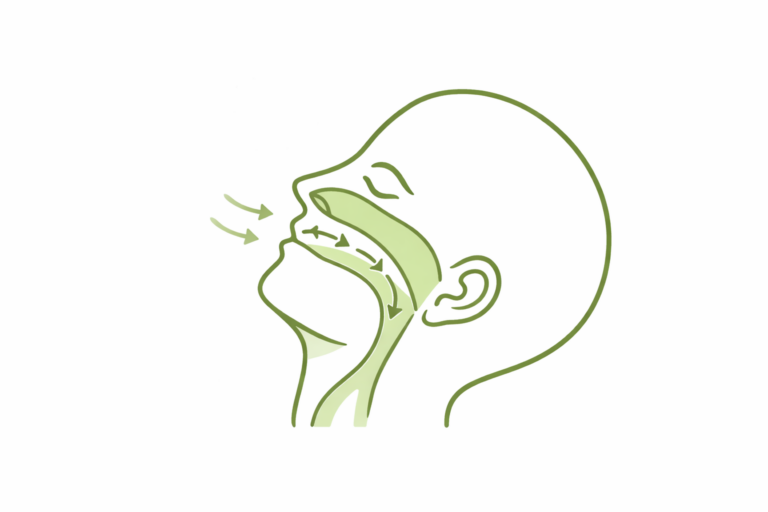
TMJ symptoms rarely come from the jaw alone. They can involve joint mechanics, muscle tension, bite function, posture, breathing, and sleep. At TMJ Centre Melbourne, care begins with understanding why symptoms are occurring. Treatment decisions follow diagnosis, not symptom labels. Care plans are personalised and often combine approaches, with progress reviewed and adjusted over time.
Diagnosis first
Whole-body assessment
Multidisciplinary care
Staged treatment
Evidence-Informed Care
We use recognised diagnostic frameworks and current literature to help guide assessment and treatment planning where relevant.
- Neuroplasticity and central sensitization in orofacial pain and TMD (Minyé, 2020)
- Headache and symptoms of temporomandibular disorder (Headache, 2010)
- Headache and temporomandibular disorders: are they related? (Cephalalgia, 2008)
- Migraine and temporomandibular disorders: bidirectional association (Dias et al., 2025)