
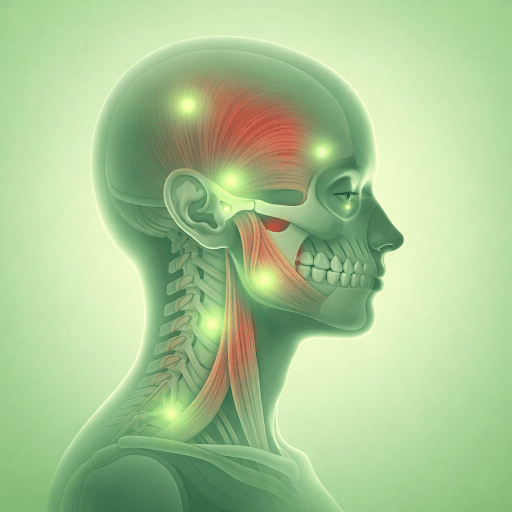
Before treatment is recommended, the first step is to understand what may be contributing to your symptoms. Assessment may consider jaw joint movement, muscle activity, bite position, clenching or grinding, sleep quality, posture, and related neck or facial pain. Care may involve one treatment or a combination of approaches. It is reviewed and adjusted over time based on symptoms, jaw function, and response to care.
TMJ symptoms often involve more than one contributing factor. A care plan may include support for the jaw joints, muscles, posture, sleep, breathing, and daily habits. Where appropriate, care may involve both dental and musculoskeletal assessment.
Treatment is not a fixed pathway. It is guided by what the assessment shows.
TMJ symptoms often involve a combination of joint strain, muscle overactivity, clenching, grinding, posture, sleep disruption, breathing patterns, and daily habits.
This is why one treatment is not suitable for everyone. A splint, injection, laser therapy, or muscle treatment may be useful in one presentation and not appropriate in another.
Care is planned in stages. It is reviewed over time so treatment can be adjusted as symptoms, jaw function, and contributing factors change.
The jaw does not work in isolation
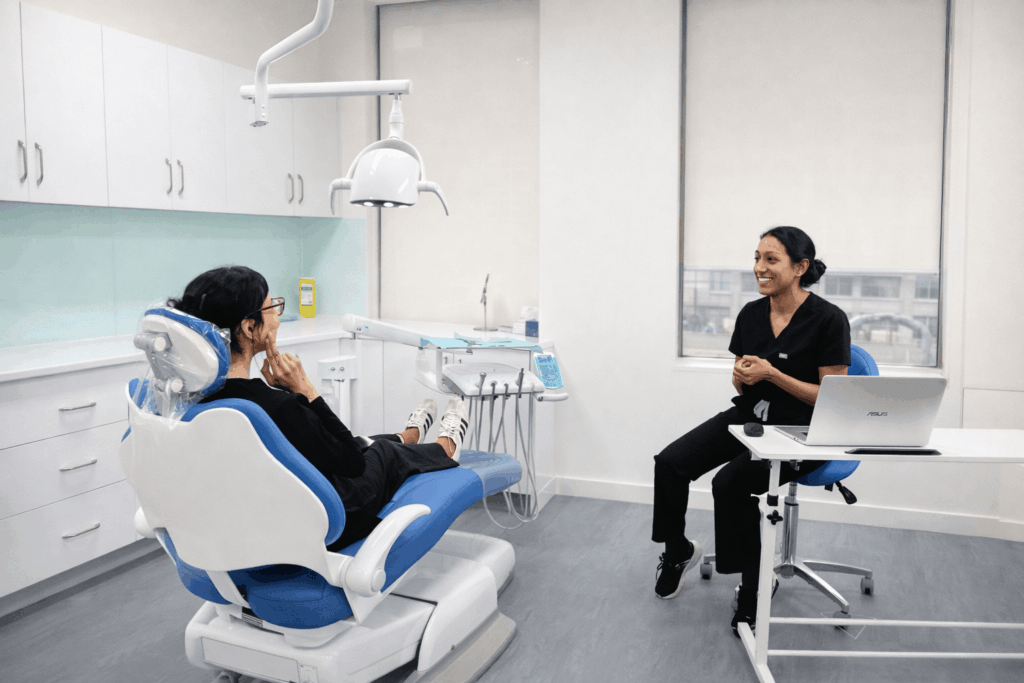
Jaw function can be influenced by the teeth, muscles, joints, neck, posture, breathing, sleep, stress, and daily habits.
Where clinically appropriate, care may consider both dental and musculoskeletal factors. This may include assessment of jaw mechanics, bite position, muscle patterns, neck function, and broader contributors to pain or dysfunction.
Not every person needs every treatment. The care plan depends on the assessment findings.